The Project
Project Overview
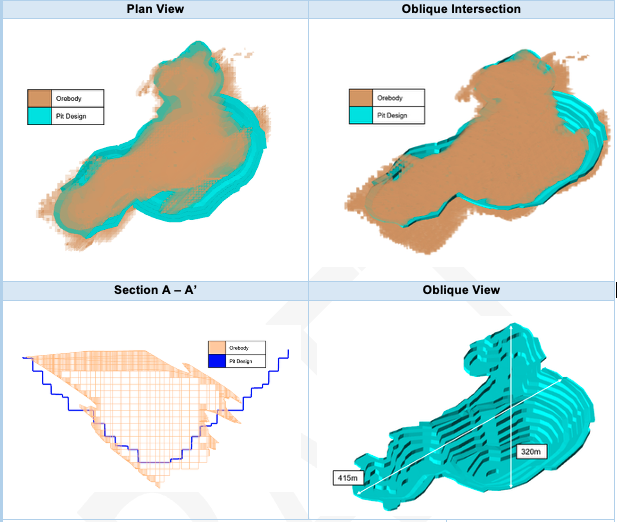
The Chongwe East Copper Project- also known as the Kabulashishi Mining Project- is located in Rufunsa District, Zambia. Owned and operated by Velos Mineral Development Ltd, the project is developing a modern open-pit copper mine and state-of-the-art flotation processing facility. The project is operating under a 25 year-mining license issued in 2025 and spanning 2,844 hectares.
Engineered to process 1,000 tonnes of ore per day, the facility utilizes modern crushing, grinding, and froth flotation circuits tailored for high-grade copper mineralization, targeting a production profile of approximately 610 tonnes of copper concentrate per month. With major infrastructure developments underway—including dedicated site access corridors, power integration studies, and an engineered Tailings Storage Facility (TSF)—commercial operations are scheduled to commence in early 2027. The asset holds an initial 10-year life-of-mine (LOM) backed by substantial exploration upside.
Beyond resource recovery, Velos Mineral Development prioritizes progressive environmental rehabilitation, rigorous containment standards, and local job creation, ensuring our operations deliver lasting shared value to surrounding host communities and national industry stakeholders.
Key Project Stats
The Velos Drilling Campaign
In 2024, Velos conducted a targeted drilling programme across the intended mining area. The results were significant:
- Confirming copper grade within the planned mining target
- Improving confidence in the geological model and weathering profile
- Validating the potential of the project as a commercially viable mining operation.
The historical and Velos datasets returned comparable mean copper grades of 0.95% and 0.93% respectively, demonstrating the reliability of the broader resource model.
Pre-Feasibility Study
Building on the above, the Chongwe East Copper Project is supported by a Pre-Feasibility Study (PFS) completed in 2025 by Minxcon (Pty) Ltd, an independent mining and resource consulting firm. The PFS assessed the viability of the project across all key disciplines- including geology, mining, processing, infrastructure, and capital estimation- and confirmed the project’s potential as a commercially viable open pit copper mining operation.
Project Timelines
| Project Phase / Milestone | 2023 | 2024 | 2025 | 2026 Q1 | 2026 Q2 | 2026 Q3 | 2026 Q4 | 2027 Q1 | ||
| Exploration License | 🟢 | — | — | — | — | — | — | — | ||
| Environmental Impact Statement Approval | — | — | 🟢 | — | — | — | — | — | ||
| Independent Resource Definition | — | — | 🟢 | — | — | — | — | — | ||
| Mining License | — | — | 🟢 | — | — | — | — | — | ||
| Pre-Feasibility Study | — | — | 🟢 | — | — | — | — | — | ||
| Detailed Design | — | — | — | 🟢 | — | — | — | — | ||
| RAP Approved & Land Secured | — | — | — | — | 🟢 | — | — | — | ||
| Finance Secured | — | — | — | — | — | 🔵 | — | — | ||
| Plant Design, Procurement & Installation | — | — | — | — | — | — | 🔵 | — | ||
| Site Construction & Infrastructure | — | — | — | — | — | — | 🔵 | — | ||
| Commence Mining | — | — | — | — | — | — | 🔵 | — | ||
| Plant Commissioning & Start-Up | — | — | — | — | — | — | — | 🔵 |
Project History
The Chongwe East site has a history of exploration and development stretching back to the 1950s. It has passed through the hands of several significant mining entities over the decades:
✦
1952
Rhodesia Selection Trust
✦
1961–1970
Roan Consolidated Mines Limited
✦
2005–2007
Zambezi Resources Limited
✦
2013
Kabulashishi Mine Limited
✦
2023-Present
Velos Mineral Development
This long history of exploration has generated a substantial dataset that, combined with Velos’ own 2024 drilling campaign, provided the foundation for the current mineral resource estimate and Feasibility Study.
Project Location
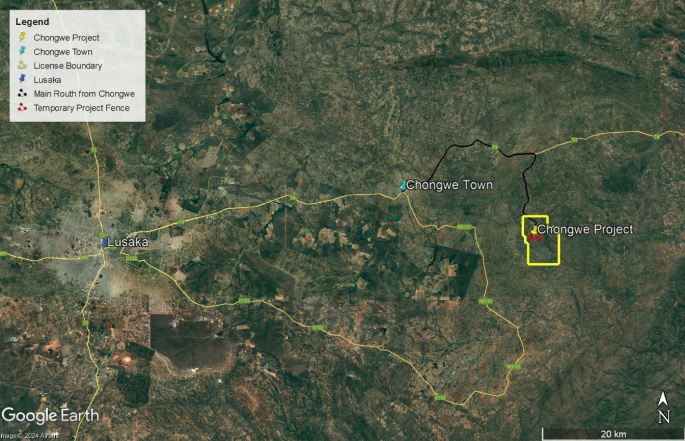
The Chongwe East Copper Project is situated in the Kabulashishi area of Lusaka Province, Zambia, approximately 60 kilometres south of Rufunsa District. The project falls within the North Eastern extension of the Zambezi Belt- a recognised copper-mineralised geological corridor.
The project area benefits from reasonable proximity to Lusaka, providing access to logistics networks, services and administrative functions. Road access to the project area is established, with haul roads, service roads and an access road all incorporated into the project’s infrastructure planning.